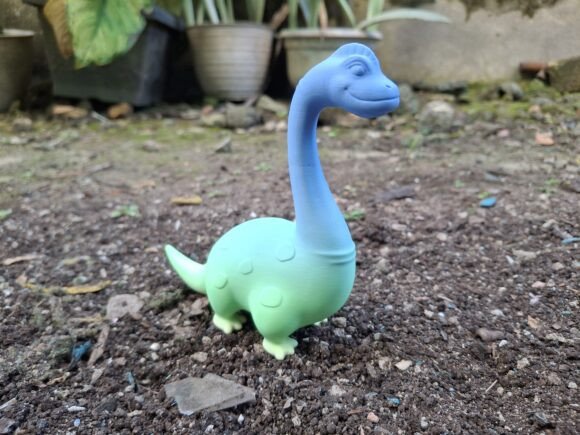
Brontosaurus 3D Print Model
The Brontosaurus 3D print model offers a unique way to bring prehistoric wonder into your workspace or classroom. Designed for enthusiasts and professionals alike, this model captures the essence of one of Earth's most fascinating creatures. Whether you're a hobbyist, educator, or designer, the Brontosaurus 3D print model provides a tangible connection to paleontology that's both educational and inspiring.
This detailed model is scaled down to fit a size of approximately 56.9362 mm x 160.884 mm x 159.638 mm, making it ideal for most tabletop environments. Its compact size doesn't limit its potential—users can easily scale it up or down depending on their needs. The design is versatile, allowing for creative customization and adaptation across various projects.
Why the Brontosaurus 3D Print Model Stands Out
The Brontosaurus, known for its massive size and long neck, presents a unique challenge in 3D printing. The model includes intricate details that reflect the dinosaur's anatomy, making it a great tool for learning about prehistoric life. Its complexity also makes it an excellent project for those looking to refine their 3D printing skills.
One of the key features of this model is its adaptability. It can be used in multiple ways, from educational displays to artistic interpretations. For educators, it serves as a hands-on resource for teaching students about dinosaurs and paleontology. For artists, it offers a foundation for creative experimentation with textures, colors, and materials.
Printers may need to use support structures when creating this model due to the long neck and tail. This requirement highlights the importance of understanding your printer's capabilities and adjusting settings accordingly. By following best practices, users can achieve high-quality results that showcase the model's full potential.
Creative Possibilities with the Brontosaurus 3D Print Model
The Brontosaurus 3D print model opens up a world of creative opportunities. Educators can use it to create interactive lessons that engage students in science and history. Museums and exhibit designers might incorporate it into displays that bring ancient ecosystems to life. Hobbyists can customize the model with paint, decals, or additional parts to make it their own.
Designers and makers can experiment with different styles and approaches. Some might choose to print the model in a realistic, anatomically accurate style, while others might opt for a more stylized or abstract interpretation. The model's structure allows for variations in color, texture, and material, making it a flexible base for creative exploration.
For those interested in storytelling, the Brontosaurus 3D print model can serve as a centerpiece for narratives about prehistoric life. It can be part of a larger diorama or used in digital content creation, such as animations or virtual exhibits. Its versatility makes it a valuable asset for creators looking to add depth and authenticity to their work.
Adapting the Model for Different Goals and Audiences
The Brontosaurus 3D print model can be tailored to suit a wide range of goals and audiences. For example, a teacher might adjust the scale to fit a classroom display, while a small business owner could use it as a promotional item or gift. The model's flexibility allows users to align it with their specific needs and objectives.
Users can also modify the model to fit different platforms or formats. It can be integrated into augmented reality experiences, used in 3D animation projects, or incorporated into product designs. By adapting the model to new contexts, users can expand its applications and reach a broader audience.
When working with the Brontosaurus 3D print model, it's important to consider the intended audience. A model designed for children might include simplified details and bright colors, while one meant for professionals could emphasize accuracy and realism. Understanding the audience helps ensure that the final product is both effective and engaging.
Practical Tips for Printing Success
To achieve the best results with the Brontosaurus 3D print model, it's essential to pay attention to print settings. Using the right layer height, infill density, and print speed can significantly impact the quality of the final product. Users should also consider the type of filament they're using, as different materials may require adjustments in temperature and flow rate.
Support structures are often necessary for the model's long neck and tail. Ensuring that these supports are properly placed and removed after printing can help maintain the model's integrity. Users should also take time to test prints on smaller sections before committing to a full print, which can save time and materials in the long run.
Once printed, the model can be further enhanced with finishing techniques. Sanding, painting, or applying a clear coat can improve its appearance and durability. These steps not only make the model more visually appealing but also increase its usefulness in educational or display settings.
Conclusion: Bringing Prehistory to Life
The Brontosaurus 3D print model is more than just a digital file—it's a gateway to creativity, education, and exploration. Whether you're a seasoned maker or just starting out, this model offers a rewarding project that combines technical skill with artistic expression. Its practical design and adaptability make it a valuable resource for anyone interested in dinosaurs, paleontology, or 3D printing.
By taking the time to understand the model's requirements and experimenting with different approaches, users can unlock new possibilities and bring their own vision to life. With the right tools and techniques, the Brontosaurus 3D print model can become a standout piece in any collection or project.